Summarizing the News with AI: Reading Efficiently While Watching for Bias
How to Keep Up With the News in Less Time Using AI — and Read the Summaries Critically
The news never stops. Breaking stories, follow-ups, analysis, and the same event told a dozen different ways all land in your feed before breakfast. Reading every piece that looks important would swallow the morning, so most of us skim headlines and hope we caught what mattered.
An AI summary offers a middle path. Instead of reading a long report end to end, you take in its key points in a fraction of the time, then decide whether the full article is worth opening. Done well, that lets you follow more stories without giving up your whole day to them.
There's a catch worth stating plainly, though: a summary is a compression of the original, and compression drops detail. This piece covers both halves of the habit — how to keep up with the news efficiently, and how to read AI summaries critically so accuracy and bias don't slip past you.
TimTim Browser: Summarize News Pages with AI
TimTim Browser lets you use the summary feature for free, so it's never a fully paid-only tool and you can start whenever you like. For full access to every feature, there's also a paid Subscription plan, and after you sign up you get a 3-day free trial to see how it feels in practice.
Developed by TimTim Pte. Ltd., it is the first AI browser of its kind (based on our research) to automatically summarize web pages, videos, books, and PDFs. It has AI pull the key points out of news pages, articles, Wikipedia entries, YouTube videos, and more, so you can take in the content in about one-twelfth of the usual time. That means you can absorb the equivalent of 120 minutes of reading in 10 minutes, saving more than 60 minutes a day.
Privacy shapes how it works. For general web articles, the app shows a manual "Summarize" button rather than sending pages off on its own, and those summaries are cached only on your device. Public pages such as Wikipedia and major news sites are summarized automatically — which is why most major news pages start summarizing the moment you open them, with no extra tap.
Multilingual support is a real advantage for news. It auto-translates content from 100+ languages and can summarize in 54, so an overseas report or a foreign-language story comes through as key points in your own language. Following a story past your own borders no longer means wrestling with a separate translator first.
There's also a feature that visualizes the time you save. Set your hourly rate, and the minutes freed up by summaries are converted into a monetary value and shown on daily, monthly, and yearly dashboards — a simple way to see what your reading habits actually cost.
How to Keep Up With the News in Less Time Using AI

The problem with the news isn't finding it — it's the sheer volume. AI summaries help most when you use them to triage, not to replace reading entirely.
Here are three ways summaries help you stay current without losing the day to it.
Scan more stories and decide which are worth a full read
On a busy news day, dozens of headlines compete for your attention and the headline alone rarely tells you enough. A quick summary gives you the gist of each story — what happened, who's involved, why it's being reported — in the time it would take to read one article in full.
That turns your feed into something you can triage. Most stories you can note and move on from; a few you'll want to read in full at the source. Spending your close-reading time on the pieces that actually warrant it is the whole point.
Follow overseas news in your own language
Some of the most useful reporting on a story is published where the story is happening, in the local language. That coverage tends to stay out of reach for anyone who doesn't read it, which quietly narrows the picture you get.
When a tool translates and summarizes together, a report from another country arrives as key points in your own language. You can compare how a home outlet and a foreign one frame the same event, and pick up context that a single national feed would leave out.
Turn the time you save into output or rest
Staying informed shouldn't cost you the rest of your morning. When summaries trim the time you spend reading, the minutes you get back are yours to use — for writing up what you learned, discussing it, or simply stepping away from the screen.
There's a quieter benefit too. Doomscrolling through story after story wears people down. Reading the gist, deciding what deserves your full attention, and closing the rest is an easier pace to sustain over the long run.
Reading AI News Summaries Critically
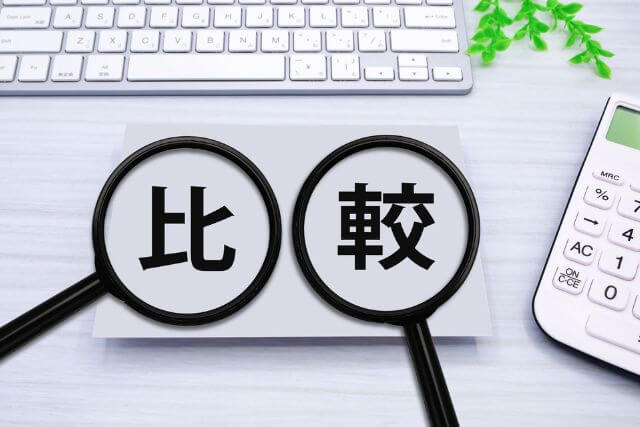
Speed is only useful if what you take away is right. A summary is a fast way into a story, not a verdict on it — and news is exactly where that distinction matters.
Here are three habits that keep AI summaries from quietly leading you astray.
A summary is a compression — confirm the specifics against the source
When a summary condenses a report, the details most likely to be reshaped are the precise ones: figures, dates, names, and the conditions attached to a claim. A rounded number or a dropped qualifier can change what a story actually says.
Before you repeat or act on anything specific, open the original and check it there. This matters most for accuracy-critical topics — health, money, law, elections — where a small slip carries real consequences. A tool that keeps the source a tap away makes that check quick enough to do every time.
Watch for what a summary can flatten
News writing is full of hedging for good reason: "reportedly," "according to officials," "preliminary figures suggest." A summary that trims those qualifiers can turn a cautious claim into a flat statement of fact, and lose track of who is actually making the claim.
So read for attribution and certainty, not just events. Ask who is saying this, how sure they are, and whether the summary preserved that. When a story is contested or still developing, the nuance a summary flattens is often the part that matters.
Cross-check important stories across more than one source
Any single outlet chooses what to emphasize and what to leave out, and a summary inherits those choices. On a story that matters to you, reading one summary tells you what that outlet foregrounded — not the full shape of what happened.
The fix is to summarize the same event from a couple of different sources and notice where they diverge. Where they agree, you can be more confident; where they don't, you've found the part that deserves a closer look at the originals. Fast summaries make this kind of comparison practical rather than a chore.
Choosing a Tool for Reading the News
Not every summary tool suits the way news actually gets read — across formats, on the move, and with the source close at hand.
Here are two things worth weighing before you settle on one.
One that keeps the source a tap away and handles many formats on any device
News doesn't arrive in one shape. A story might be a written report, a broadcast clip on YouTube, an official PDF, or a background entry on Wikipedia. A tool that summarizes across all of these — inside a single app, without switching between separate services — keeps you from breaking your reading to copy links around.
Just as important is how easily you can get back to the original. Since checking specifics against the source is part of reading the news well, a design that keeps the full page one tap away makes that habit easy to keep. Support for phones and tablets matters too, since a lot of news reading happens in the small gaps of the day.
TimTim Browser: Read the News in Less Time
A summary tool built into the browser fits the way news gets read. Open a public news page and the summary is generated automatically, with the full article always a tap away when you want to verify a figure or read the fine print. Because it handles articles, videos, and PDFs alike, you're not juggling separate tools as a story unfolds across formats.
TimTim Browser bundles this together: automatic summaries for public pages, multilingual translation for following overseas coverage, and a dashboard that shows the time you save as a monetary value. If you want to keep up with the news in less time while staying close to the source, try downloading TimTim Browser.

[Q&A] Your Questions About AI News Summaries
- Q1. How do AI summaries help me keep up with the news more efficiently?
- A. They let you triage. A quick summary gives you the gist of each story, so you can decide which ones are worth reading in full and move past the rest. You can also follow overseas coverage in your own language and put the time you save toward other work or rest, instead of losing the morning to your feed.
- Q2. How can I judge whether an AI news summary is accurate?
- A. Treat it as a fast way in, not the final word. Open the original and confirm the specifics — figures, dates, names, and any conditions attached to a claim — especially for accuracy-critical topics like health, money, law, or elections. A tool that keeps the source a tap away makes that check quick enough to do routinely.
- Q3. How do I watch for bias when reading summaries?
- A. Read for attribution and certainty, not just events: note who is making a claim and how sure they are, since a summary can flatten those hedges. For stories that matter, summarize the same event from more than one source and see where they diverge — the differences point you to what deserves a closer look at the originals.
More columns on summarizing web articles, books, YouTube, PDFs & papers
- Using AI to Summarize Web Articles and Read More in Less Time
- Web Article Summary Tools: Recommended Features and How to Get Started
- Choosing a Web Article Summary App: Benefits and How to Use One
- Summarizing the News with AI: Reading Efficiently While Watching for Bias
- How to Choose a Book-Summary App: Benefits and How to Use One
- How to Judge AI Summary Accuracy — Plus Tips to Read Books Efficiently
- How to Compare Book-Summary Services: Key Points and Pricing
- Using AI Summary Tools to Gather Information from YouTube Effectively
- Recommended YouTube Summary Tool Features and How to Get Started
- Using a YouTube Summary App for Free: Caveats and Tool Integrations
- AI Summarization at Work: PDF Use Cases and Tips for Translating Foreign Documents
- Why Structuring Papers Cuts Reading Time: PDF Summary Accuracy Caveats
- Tips for Using AI Summaries to Read Academic Papers — and Judging Reliability
- Sign-Up Flow for a Web-Style Paper-Summary App and Supported Documents
TimTim Browser: Summarize Web Articles, News, and Blogs with AI
| Name | TimTim Browser |
|---|---|
| Contact Form | timtim.app/contact |
| URL | https://timtim.app |